
Certified Scrum Master
Certified Scrum Master (CSM)
Experience Scrum instead of just understanding it – your path to becoming an effective Scrum Master

CSM certificate from the Scrum Alliance
included in the price and recognized worldwide.

2 days of workshop-style training -
hands-on, interactive, and definitely not a slide parade!

Over 20,000 participants have
already successfully completed trainings with improuν.

Guaranteed to run with top trainers
who actually work with teams
Certification by

Certified Scrum Master® (CSM)
- In Person / Online
- English
- 2 Days
Your Trainers
4.89
(19 reviews)
From
1400 €
plus VAT
Away from moderating meetings, toward genuine team effectiveness!
Our CSM training provides you with attitude, practice, tools, and new inspiration. For anyone who wants to really move teams forward as a Scrum Master.
The Scrum Master is indispensable, especially in agile collaboration, because they strengthen the team, remove impediments, and enable real improvement. In our training, you will learn exactly that from practical professionals—and much more:
Why agility is more important today than ever before
Why agility is more important today than ever before
Really understanding Scrum
Really understanding Scrum
Attitude instead of a rigid approach
Attitude instead of a rigid approach
Your role as a Scrum Master
Your role as a Scrum Master
Learn, improve, grow
Learn, improve, grow
Tips, tricks & tools for everyday life
Tips, tricks & tools for everyday life
Sound exciting? Then sign up now for our CSm training and take the next step in your career!
LEARNING ON A HIGH NOTE
The CSM Certification is designed for

Aspiring Scrum Masters
who want to learn their role from scratch and perform it professionally.
Scrum Masters with initial practical experience
who want to deepen their understanding and seek new inspiration for their daily work.
Project managers
who want to experience and use agile methods in practice.
Managers
who want to better understand agility and support their organization in its agile transformation.
Agile coaches and consultants
who are looking for new learning formats, tools, and perspectives for their work with Scrum teams.
Anyone
interested in agile working methods.
LEARNING ON A HIGH NOTE
Your Upcoming Events
No courses are currently available. Ask for a custom taylored inhouse training.
WHAT YOU WILL LEARN
Course Breakdown In Easy Modules

1The big picture of agile collaboration
Why are new forms of organization needed? When is agility appropriate—and when is it not? You will learn the basics of agility and empirical process control.
2Understanding Scrum: responsibilities, events, artifacts
What makes Scrum special? We will shed light on the overall context and how everything fits together – with a focus on practical applicability rather than mechanical processes.
3Responsibilities in the Scrum Team
Who is responsible for what – and where are there overlaps? You will understand the tasks of the ScrumMaster, Product Owner, and Developer, and how a strong Scrum Team is created through shared responsibilities.
4Scrum events with meaning and impact
Daily, planning, review, retro – we go beyond the agenda. You will learn what the events are really about, how to make them lively, and how to avoid “Scrum facades.”
5Agile mindset & Scrum values
You will learn what attitude means in concrete terms, how to promote values in a team, and why principles are more important than processes.
6Practical training: simulation & case studies
Experience Scrum in a protected space. In simulations, group work, and teach-backs, you will practice real-life situations and receive valuable feedback.
INVESTED IN YOUR SUCCESS
Get to know your trainer(s)
Whether you come to our training alone or learn together as a team, our first-class trainers and coaches bring years of practical experience to the table, helping you to apply everything you learn confidently and directly in your company.

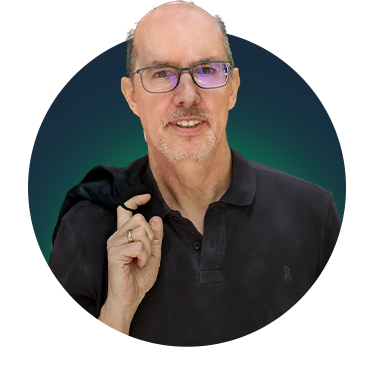
Jens Coldewey
Jens Coldewey
Senior Executive Consultant, Trainer, CEO
⟶ Over 20 years of experience in organizational development
⟶ Conference speaker and author
⟶ Certified Scrum Trainer, Accredited Kanban Consultant, Accredited Kanban Trainer
⟶ Agile thought leader since 1998

We need to rethink organisations.
LinkedINThis is why you want to choose improuv for your training

Top-Notch Expertise
All our trainers have over 12 years of hands-on experience in agile environments. They combine deep methodological knowledge with practical expertise from working across hierarchies, industries, and company sizes. Their backgrounds span from team coaching to strategic leadership, ensuring your training is built on a foundation of real-world excellence.
Field-Tested Insights
Our trainers don’t just teach—they actively coach agile teams every day. This keeps their perspectives fresh, their stories authentic, and their advice grounded in current challenges. You benefit from what actually works out there, not just from theory or slide decks.
Immediate Application
Our training is built for direct impact. With a strong focus on real-life cases, interactive exercises, and practical tools, you’ll walk away ready to apply what you’ve learned the very next day. No fluff—just usable, relevant insights tailored to your work context.
Al-Driven Efficiency
We don’t just talk about AI: we use it. Our training shows you how to integrate modern AI tools into your daily workflow to increase clarity, speed, and focus. Learn to work smarter, automate the boring stuff, and free up time for what really matters.
Free 30-Minute Coaching
Every training includes a free 30-minute one-on-one coaching session. Use it to reflect, ask specific questions, or get tailored feedback on your real challenges. It’s your opportunity to get the most out of the training and make it stick.
Money-Back Guarantee
We believe in the quality of our trainings. If you’re not satisfied, we won’t keep your money. Our no-questions-asked money-back guarantee ensures that your investment is 100% risk-free, and your satisfaction is our top priority.
TESTIMONIALS
What They Say About Us
We enjoyed a perfect fit of SCRUM theory and practising along the SCRUM flow. Thank you, Jens.

We enjoyed a perfect fit of SCRUM theory and practising along the SCRUM flow. Thank you, Jens.
Great course, hands-on and insightful!
Great course, hands-on and insightful!
Very interactive course. Recommended.
Very interactive course. Recommended.
FREQUENTLY ASKED QUESTIONS
Training FAQ
In which language is the training conducted?
We offer our trainings in either German or English.
What’s included in an on-site training?
To keep you energized throughout the day, we provide tea, coffee, and other refreshments, plus snacks and a communal lunch—all included in the price.
What do I need for a remote training?
We use Miro as a shared whiteboard, and the training itself takes place on Zoom (or Microsoft Teams for in-house sessions). You’ll have the most fun if you have a stable internet connection, a good mic and camera, and a comfortable space where you can focus.
How quickly do I get my certificate?
It depends on your training:
- If you attend a Certified Scrum Master (CSM) training, you need to pass an online test afterwards in order to get the certificate. The training prepares you very well for the test, and you can also retry.
- For all other certificates (e.g. CSPO, A-CSPO, etc), there is no exam needed and you’ll get the certificate usually on the day after the training.
Wait—are certificate and fees already included in the price?
Yes! You’ll receive your certificate from the Scrum Alliance, the gold standard for agile trainings worldwide. A two-year Scrum Alliance membership—with all its benefits—is also included. The only requirement is that you attend both full training days without frequently stepping out for other meetings.
Can I start working in my role right after the training?
This training prepares you perfectly to apply to your role right away. It’s designed to fit your day-to-day work as closely as possible, so you can hit the ground running.
Is the training more theory or practice?
We like to call our sessions “trainings with a workshop character.” There are a few essential theoretical basics you shouldn’t miss, but most of the training is hands-on and interactive. We share real stories and examples from our work as agile team coaches and organizational coaches. Our goal is for you to walk away after two or three days ready to jump right in.
A free half-hour of individual coaching?
Exactly! To help you put everything new into practice with your team, you’ll get a 30-minute one-on-one coaching session after the training. Pretty cool, right?
What if I need to step out of the training halfway through?
Well, if it’s really urgent, you could miss an hour and we’ll catch you up later in the evening. However, you’ll get the most benefit if you can fully dedicate those days to the training. So, consider arranging for a substitute during the training, or reschedule the training for a time that’s not so hectic for you.
Do you also help companies implement Scrum?
All the time. Sometimes we start with individual teams, but we also love to look at the bigger picture and work with you to figure out how to scale agility in a way that fits your organization. Scrum, Kanban, OKRs, SAFe, Flight Levels … it always depends on the context. Just set up a free (but priceless) consultation and introduction call with us below.
Can I book a training for my entire team?
Absolutely! Whether you’re just getting started or already in the thick of it, it really brings a team together when everyone attends the same training and learns how Scrum roles, responsibilities, and teamwork fit their needs. In such cases, we tailor the agenda even more to your specific challenges. It’s a real advantage that our trainers regularly work with teams, so you can see firsthand what works well in other organizations. Check out our contact form below.
CUSTOMIZED SCRUM TRAINING
Request a Customized Scrum Training for Your Entire Team
Got more than four participants or want to upskill your entire team?
Then our customized in-house trainings and workshops are just what you need. Starting at five participants, they’re especially cost-effective and tailored precisely to your team’s needs.
Whether it’s Scrum, Kanban, or scaling with SAFe – we adapt to your setup. From setting goals with OKRs or roadmaps, driving innovation with Design Thinking, structuring work with MVPs, story mapping, and small releases, to team dynamics.
Book your free (yet priceless) consultation today.
More than 200 companies
trust improuv
Your contact person: Jens Coldewey, Managing Partner
WHAT’S NEW ?
Latest From The Blog

Artificial Intelligence Holds Enormous Potential for Professionals
Especially for Product Owners, who can quickly and effectively benefit from its possibilities.
Over the past year, we’ve gained extensive hands-on experience with various applications and discovered that AI not only saves time, but also significantly enhances a Product Owner’s multi-perspective product view, decision-making foundation, scope clarity, and communication. Its true strength also shines in brainstorming and sparring: when used correctly, AI becomes a creative partner for the entire team, consistently offering fresh perspectives.
In our new training “ChatGPT & Co. for Product Owners,” we share our insights from working with large language models (LLMs) and image generation tools. Whether it’s extracting insights from qualitative data, roadmapping, chart creation, stakeholder communication, brainstorming, or requirements engineering sparring — the use cases are diverse and the outcomes truly exciting.
Trainer Sacha Storz has spent the past two years deeply immersed in generative AI, with training from Stanford University, IBM, the University of Pennsylvania, DataCamp, and deeplearning.ai. He not only teaches the specific opportunities this technology offers for POs, but also covers key topics like privacy, security, and bias, to ensure you can work with GenAI safely and responsibly.
The training will take place remotely in early December 2024, split into two 3-hour sessions. We’re thrilled to already guarantee the session will run! Interest is high, and we’re excited to guide you on this learning journey.
Join us and discover how GenAI can enrich your work as a Product Owner or Product Manager.
👉 More info and registration here.
Bonus: This training qualifies for 6 SEUs towards renewing your CSPO or CSM certification!

A few years ago, we chose a new tagline: “It’s time for change.” We liked it — and we still do — because it reflects the needs of our clients. It acknowledges that strategies which may have worked in the past are no longer competitive in our fast-paced future. Our clients know that to meet new challenges, you need to prepare — not ignore them, and certainly not try to prevent them. They know that with our support, they can rise to these challenges. And they know the time is now, before the pace of change leaves them behind.
Unfortunately, a far-right party — one infiltrated by neo-Nazis — is now using a very similar slogan in its election campaign in Brandenburg. We explicitly distance ourselves from the goals, methods, and masterminds of this party. As legal action is unfortunately not an option — our tagline is neither protected nor protectable — we have made the difficult decision to retire it.
We stand for a working world built on psychological safety.
We stand for respectful leadership that acknowledges reality and seeks sustainable solutions.
We stand for the power of diverse thinking.
We stand for trust-based collaboration, regardless of origin, citizenship, culture, religion, or personal life choices.
We stand for the will to shape the future constructively and sustainably.
Everything we stand for is the complete opposite of what that party represents.
That’s why, from now on, our new tagline is:
“Shaping the Future. Leading with Purpose.”
For improuv,
Jens Coldewey
Sacha Storz
Theresa van Bernum
Alisa Ströbele
Sabine Canditt
Margarete Cyll
Nadine Bleck
Sebastian Heglmeier
Let me know if you’d like a more formal version for press release purposes, or a condensed one for social media.

When some people talk about self-organizing teams, I sometimes get the impression that self-organization is seen as a magic wand that solves all problems. Let’s be honest: self-organization can fail — leading to dysfunction or even self-destruction. Yes, self-organizing systems have an impressive level of resilience to external disruptions. But they also have their weaknesses.
Some examples of failures in self-organizing systems:
An epileptic seizure is a failure in the brain’s self-organization. Cancer is a breakdown in the self-organization of cells. Even markets — often praised for their self-regulating nature — can fail, triggering hyperinflation or banking crises. (Sorry, my neoliberal friend, but Adam Smith was wrong.) In many of these cases, external intervention — by a doctor or a government — can reduce the impact of failure and help the system “heal” or at least slow its collapse.
So where are the limits of self-organization in teams?
Human self-organization relies on open communication and a baseline of trust. If communication breaks down — for example, in remote environments where communication is neglected — self-organization collapses. If you introduce a psychopath or pathological narcissist into a team, they can completely erode trust and collaboration. These situations have the potential to turn a team into a dysfunctional group.
Even well-functioning, self-organizing teams sometimes struggle to make certain decisions — especially when personal goals conflict with organizational interests.
We often encounter this in discussions about team structure at scale:
High-performing teams are more than boxes on an org chart — they’re social homes for their members. Teams will defend that home fiercely, no matter how compelling your Excel models may be.
Another example: changes to compensation models.
The tension between individual finances and the “greater good” can be too strong for a team to resolve without falling apart.
Of course, one could take the mindset of, “Whatever happens is the only thing that could have happened,” and let the team fall apart. That’s what happens in fully self-organized human relationships — like friendships. But in organizations, teams don’t exist for their own sake — they exist to fulfill a purpose. If they can no longer do that, they are dysfunctional.
As a leader, you must recognize when a team’s self-organization begins to fail. And you must intervene — just like a doctor intervenes when the body’s self-healing abilities are no longer enough. To choose the right intervention, you need a solid understanding of how self-organization works — and where the root problem lies. Just as a doctor needs to understand the human body before treating illness.
And just like a doctor can choose between mild treatment or a major, risky surgery, you also have choices between gentle or drastic interventions.
Mild measures may include bringing people together or organizing external support. Harsh measures might mean overruling the team or letting someone go. And as with surgery, tough interventions require aftercare and recovery time. If you “operate” every week, the team won’t survive.
My personal benchmark for timing is this:
If people say afterward, “Why did you wait so long?” — then the timing was probably right.
Only resort to drastic actions after all softer approaches have failed.
Hedi Buchner ist Teil der Agile Tour Luxembourg 2024.
Ihr Talk am 19. April trägt den Titel: Sustainable development needs inner development – agile steps towards a life-affirming future
Hierum geht´s:
Agility is used within our economic system to keep the business running and growing if possible. But let’s face it: this very system is the cause of the climate crisis and other related sustainability problems. Can we use agility as an “accelerator” to achieve the UN Sustainable Development Goals (SDGs)? What inner capabilities do we need to deal with these increasingly complex challenges and foster global transformation? What small steps can we start with to make a lasting impact?
The workshop aims to raise awareness of this challenge – and the responsibility that comes with it. As an inspiration, we will show concrete examples of Agilist:ins who have already embarked on a sustainable path. Together we explore the SDGs and develop ideas on how we, as agilists, can contribute to them: in product development, with our teams and organizations, but also in our personal lives. We will take a look at the Inner Development Goals (IDGs) and consider how they can enhance our agile competencies to achieve sustainable goals, for example through long-term orientation and caring for others.

We are happy to present our next speaker at the Agile Tuesday. Bob will give an AMA (Ask me Anything) Session. Right now we are collecting questions.
This event will be in English. We are using Google Meet, so you can live translate it into German or any other language if you want to.
Bob Galen
Bob Galen is an Agile Practitioner, Trainer & Coach based in Cary, NC. In this role he helps
guide companies and teams in their pragmatic adoption and organizational shift towards Agile
methods of working. Bob has been doing that since the late 1990s, so he’s deeply experienced.
He is the Director of Agile Practice at Zenergy Technologies, a leading business agility
transformation company. Bob is also President and Head Coach at Agile Moose, a boutique agile
coaching firm.
He is a Scrum Alliance Certified Enterprise Coach Emeritus (CECem), an iCAgile authorized
trainer, and an active member of the Agile Alliance.
He’s published four agile-centric books:
- The Three Pillars of Agile Quality and Testing in 2015
- Scrum Product Ownership, 3’rd Edition in 2019,
- Agile Reflections in 2012,
- Extraordinarily Badass Agile Coaching in 2022.
He’s also a prolific writer & blogger (www.rgalen.com and www.agile-moose.com) and podcaster (at www.meta-cast.com )
Connect with Bob here
10 Trends & Potentiale für wertstiftenden OKRs und neue Perspektiven rund um das Konzept OKRs und einen Überblick über aktuelle Trends
Langsam aber sicher etablieren sich OKRs als feste Größe in Organisationen. Aber ist das eigentlich gut und sinnvoll, oder verkommen sie bald zur nächsten Checkbox im Rahmen von Transformationen, deren Wirkung oft ausbleibt? Wie hilfreich ist die
steigende Popularität für die Weiterentwicklung von OKRs als Framework und die
umgebende Community? Und geht es auch anders?
In ihrem Vortrag werden Cansel Sörgens und Natalija Hellesoe zehn aktuelle Trends zum Thema aufdecken – von OKR-Architekturen bis zur skalierten Umsetzung, von strategischen Kompetenzen bis zum Rollenverständnis im Prozess.
Die OKR Expertinnen gleichen erhoffte und tatsächliche Auswirkungen der Trends ab und hinterfragen deren Sinn für die Organisationsentwicklung. Außerdem zeigen sie auf, wie ein durchdachter Einsatz von OKRs jenseits der “simplen Idee” Wert stiften kann.
Egal ob Ihr erst darüber nachdenkt, mit OKRs zu arbeiten oder diese bereits
eingeführt habt und nach Möglichkeiten suchen, die Strategieumsetzung zu
verbessern: Steigt ein in eine praktische Diskussion, wie die Zukunft von OKRs
neu gestaltet werden kann, um dazu beizutragen, die aktuellen und künftigen
Herausforderungen zu meistern!
:::::::::::::::
Cansel Sörgens
Cansel beschäftigt sich seit 2011 mit Agile Organisationsentwicklung. In schnell wachsenden Organisationen verantwortete sie strategische, abteilungsübergreifende Projekte und Agile Transformation. Seit 2016 implementiert Cansel Sörgens OKR in B2B-, B2C-, B2B2C-Organisationen jeder Größe aus unterschiedlichen Branchen wie E-Commerce, Retails, MedTech, FinTech, InsureTech, Consumer Electronics, Pharma. Ihre langjährige und praxiserprobte Expertise in OKR, Strategie und Leadership teilt sie als Rednerin, Autorin und Gründerin der ersten OKR Lean Coffee und Reshaping the Future of OKRs. Mehr: https://cansel-soergens.com
Natalija Hellesoe
Natalija ist Unternehmerin, Trainerin und Coach und konzentriert sich vor allem auf die Themen Leadership & Responsibility, OKRs sowie auf Agile HR & Learning. Sie unterstützt Teams und Organisationen dabei, ihre Herausforderungen besser zu verstehen, wertschöpfende Ziele zu definieren und sich kontinuierlich zu verbessern.
Vor ihrer Selbstständigkeit war Natalija viele Jahre an der Schnittstelle zwischen HR, IT und Kommunikation tätig und hat Transformationen in verschiedenen Organisationen begleitet. Ihre Arbeit ist geprägt durch Perspektivwechsel und dem Experimentieren mit neuen Methoden und Möglichkeiten, die sie aus der Zusammenarbeit mit globalen Netzwerken, ihren Reisen und der großen Freude an persönlicher Weiterentwicklung schöpft.
Unter der Marke “OKRs AT THE CENTER” begleitet Sie Organisationen auf verschiedenen Abschnitten ihrer OKR Reise von der Einführung, Skalierung, internen Ausbildung bis zur nachhaltigen Verbesserung. Zusammen mit Sonja Mewes hat Natalija das Buch “OKRs AT THE CENTER: How to use goals to drive ongoing change and create the organization you want” bei Sense & Respond Press veröffentlicht und ist seit vielen Jahren sehr aktiv in der OKR Community, u.a. mit monatlichen Meetups, Open Space Events und Beiträgen zu internationalen Konferenzen